
In June, I headed out on my annual summer recording trip, started years ago as a way to save my dog from the sound of fireworks around the 4th of July. That dog is gone and my current dog is deaf, so the need to avoid fireworks is not as pressing. But the summer solstice is peak activity for birds in this part of the world, so the recording trips continue. I’ve tried to move the trips a little earlier each year to try to catch some of the birds that sing earlier, but some contract work analyzing recordings to document recovery from wildfire kept me busy until mid-June this year.
My first stop was in the central Warner Mountains, a lovely fault-block range in northeastern California that stretches across the border into southeastern Oregon. It was formed by the same tectonic forces as the Sierra Nevada but lacks the batholith exposure that defines the High Sierra. The mountain range separates the high desert of northeastern California from the dry Great Basin to the east, creating a Sky Island effect – forest covered mountains surrounded by desert. Elevations range up to 9,000 feet, trapping moisture from the Pacific, generating cooler temperatures, winter snowpacks, and perennial streams. This extra moisture, and exposure to flora and fauna from both the Cascades and Great Basin creates a unique environment with great opportunities for wildlife viewing and sound recording. Unfortunately, it’s also on a major north-south commercial flight path and occasionally subject to military overflights from nearby air bases and all the aircraft noise makes nature recording a challenge.

The first night, on the solstice, I stayed at a small campground named Soup Spring. I’ve camped here several times before. I found a patch of thick pine and fir just south of the campground that is a pretty reliable spot to record Hermit Thrushes. The ethereal sound of the Hermit Thrush evening song is one of my favorite sounds, but it’s not always easy to record as it’s often masked by wind in the trees, the buzz of insects, and aircraft overhead. This year I got lucky, and between all the planes, a pair of counter-singing Hermit Thrushes graced my recording, accompanied by a Pileated Woodpecker and Dusky Flycatcher:
I also set up a recorder close to camp, at the edge of a meadow and picked up a lovely dawn chorus:
I then headed east to Sheldon Antelope Refuge in northwestern Nevada. I usually spend the 4th of July here, as it’s a great place to get away from everyone. It’s also a good place to record sagebrush specialists like the Brewer’s Sparrow and Sage Thrasher. Over the last couple of years, it seems like the dawn chorus have been getting a bit quieter, and I suspect the birds might be breeding a bit earlier. So, this year I was going to show up a couple of weeks early and see if that made a difference. Many species of birds do most of their singing at the start of the nesting season, as they find or reacquaint themselves with their mates and set up territories. Some will keep on singing until they head south again, others will pause when there are eggs or nestlings in the nest, and others only sing at the start of the season. I’m still figuring out where in the nesting cycle the various sage birds are. This time, the birds seemed to be pretty spread out, and all of my recordings were too faint. I still have a bit of work to do to figure out the optimum time to record birds there.

From the Sheldon refuge, I headed northwest, crossed into Oregon and back in the direction of the northern Warner Mountains. Just as I approached the mountains, I got caught in a cattle drive, as local ranchers were moving their cattle to summer pastures. The road ran through a narrow canyon here, so the cattle path was the same as the road, and there was nothing to do but slowly drive behind the 100 head or so, as the dogs barked, the cowboys whooped and whistled, and the cows and their calves bellowed and shat all over the road. The road was slick with cow poop and there was no way to avoid it. Periodically, a cow or calf would make a break for it and try to run up one of the banks above the road, prompting several dogs to bark and chase followed by cowboys whooping and whistling. Soon they would have the animal turned back to the herd, which the cows would greet with more bellowing and shitting. After at least 10 miles of this excitement, someone in a small pickup with Texas plates had had enough, bypassed those of us patiently following the cows, and tried to push the cows at a faster pace. This did not make the cowboys, dogs, or cows happy, so they responded with more whooping and whistling, barking, and bellowing and shitting. Finally, the road opened into a wider meadow and the cows spread out with the help of the whooping cowboys and barking dogs, leaving the asphalt to the motor vehicles. It was a relief to drive again on dry pavement instead of green goo. That green goo ended up taking a toll on my car by blocking some sensors in my brake system, making me think the car had some issues. This lasted for the rest of my trip. But it was just cow shit and the sensors quit sending warning signals once I washed the car.
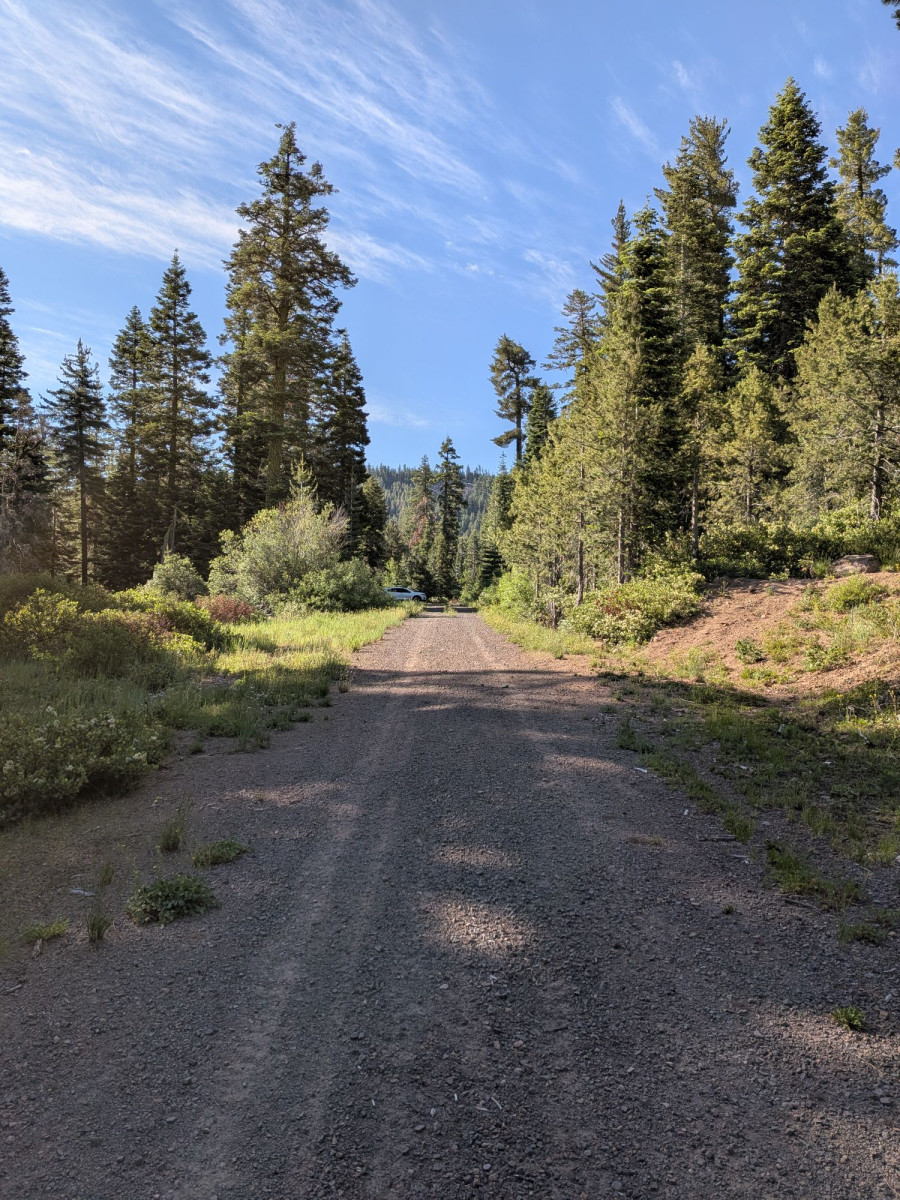
I’d planned to visit the northern Warners later in the trip, but the early arrival of the cows nudged me to head up sooner. Summer grazing is heavy in that part of the range, and I prefer to avoid camping near cows—or having them investigate my recording setups. So, I slipped in for a quick night before they grazed their way into the high country. A back road off a back road led me to a tucked‑away spot I discovered years ago. The dog and I spent a peaceful afternoon there, stretched out in the shade, listening to birds singing through the forest. As dusk approached, I set up a couple of recording rigs around camp. While placing one of the overnight mics, a baby bear suddenly dashed downhill, a blur of fur disappearing into the brush. I hesitated, wondering if bears might tamper with the equipment, but decided to leave the mic anyway. They were gracious neighbors and didn’t touch a thing.
It was a nice quiet night. The dawn chorus was very lively:
Though separated by only about 50 miles within the same mountain range, the two dawn choruses sounded remarkably different. At Soup Spring, the recording came from the edge of an aspen meadow surrounded by pine-fir forest; in the northern Warners, it came from dense second-growth stands of white fir, Douglas-fir, ponderosa pine, western white pine, and lodgepole pine. Each chorus was a distinct reflection of the habitat—and a reminder that even within one mountain range, the sound of dawn belongs to the landscape around it.
Discover more from Wild Mountain Echoes
Subscribe to get the latest posts sent to your email.